
What's the difference between seal oil capsules and regular fish oil?
- 31 Mar, 24
- Admin user
Seal oil is known for its benefits in improving blood circulation, preventing hyperlipidemia, hypertension, and lowering cholesterol levels. But how does seal oil differ in quality from fish oil?
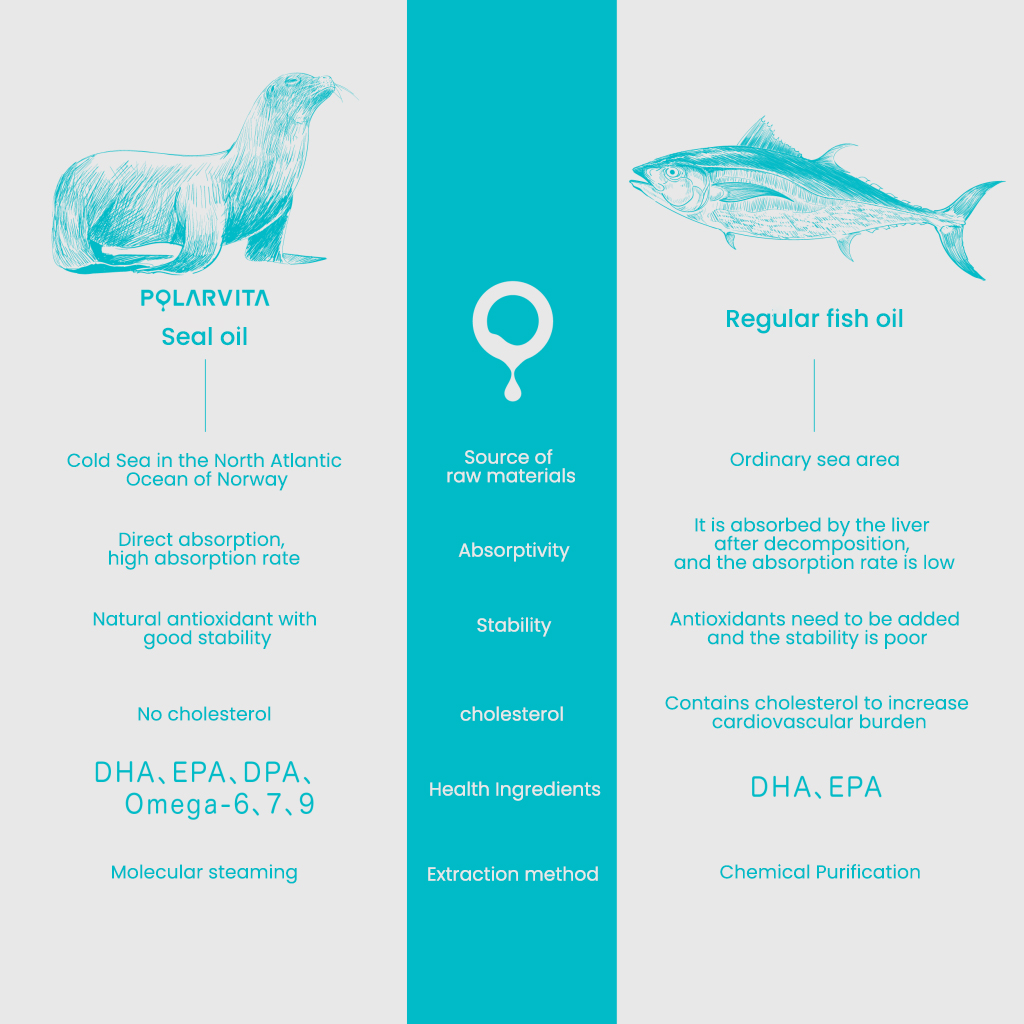
Different Absorption Rates (Seal Oil is More Easily Absorbed) Since seals and humans are both warm-blooded mammals with similar molecular structures, the nutrients in seal oil are more easily absorbed by the human body. In contrast, fish are cold-blooded animals, and consuming fish products requires the liver to break them down before absorption, resulting in a lower nutrient absorption rate.
Different Nutritional Components (Seal Oil Contains More Nutrients) Both fish oil and seal oil are rich in Omega-3 (polyunsaturated fatty acids), a nutrient the body cannot produce on its own and must be obtained from food sources such as fish, seafood, flaxseed, and perilla oil. However, the Omega-3 content in fish oil and seal oil differs; besides EPA and DHA found in fish oil, seal oil also contains DPA, Omega-6, 7, 9, which help enhance the immune system and are crucial components of breast milk, particularly important for the immune and cognitive development of newborns.
Different Extraction Methods (Seal Oil is Purer) Fish oil may be extracted from various parts of fish, including internal organs, heads, and bones, making the extraction process complex and inevitably mixing in various contaminants. In contrast, seal oil is purely extracted from seal fat, using molecular distillation to produce natural oil, resulting in higher purity.
In summary, both fish oil and seal oil are beneficial to the body. However, in terms of absorption rate, nutritional content, and extraction purity, seal oil has a slight edge over regular fish oil. When consuming an equal daily amount, the effectiveness of seal oil can be significantly more efficient!
You need to Login OR Register for comment.


Comments (0)